The Four Pillars of Extraordinary Leadership: Pillar Two — Alignment
By Laura Gramling – Founder & President

The first pillar of extraordinary leadership is Innovation, creating an environment where people feel safe to contribute ideas, challenge assumptions, and think differently.
But innovation alone is not enough.
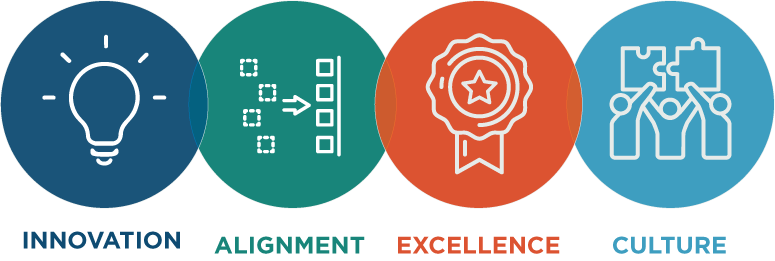
Innovation generates ideas. Alignment turns those ideas into coordinated action.
Without alignment, even the best strategies struggle to gain traction. Teams work hard, initiatives move forward, and leaders stay busy, yet progress often falls short because people are moving in different directions or for different reasons.
Misalignment is one of the most expensive and least visible problems in any organization.
In today's environment, it has more places to hide than ever.
An AI initiative launches without legal or compliance helping shape the process. A new customer experience strategy is developed without involving the frontline employees responsible for delivering it. A financial restructuring is announced with little context for how it changes everyday decisions.
Each of these reflects the same leadership challenge.
The "what" changed, but the "why" never moved with it.
Alignment is not agreement on every decision. It is a shared understanding of where the organization is going, why it matters, and how each person's work contributes to achieving that vision.
When people understand not just what they are being asked to do, but why it matters, engagement shifts from compliance to commitment.
Extraordinary leaders understand that alignment is not created through a single presentation or annual planning session. It is built through consistent communication. They translate strategy into language that connects with people's daily work, reinforce priorities through their decisions, and continually connect individual contributions to organizational purpose.
Alignment also requires leaders to develop enough technical acumen to lead across complexity. Whether conversations involve financial performance, regulatory changes, customer expectations, or emerging technologies, leaders need enough understanding to ask thoughtful questions, connect ideas across functions, and guide informed decisions. Without that fluency, communication gaps quickly become alignment gaps.
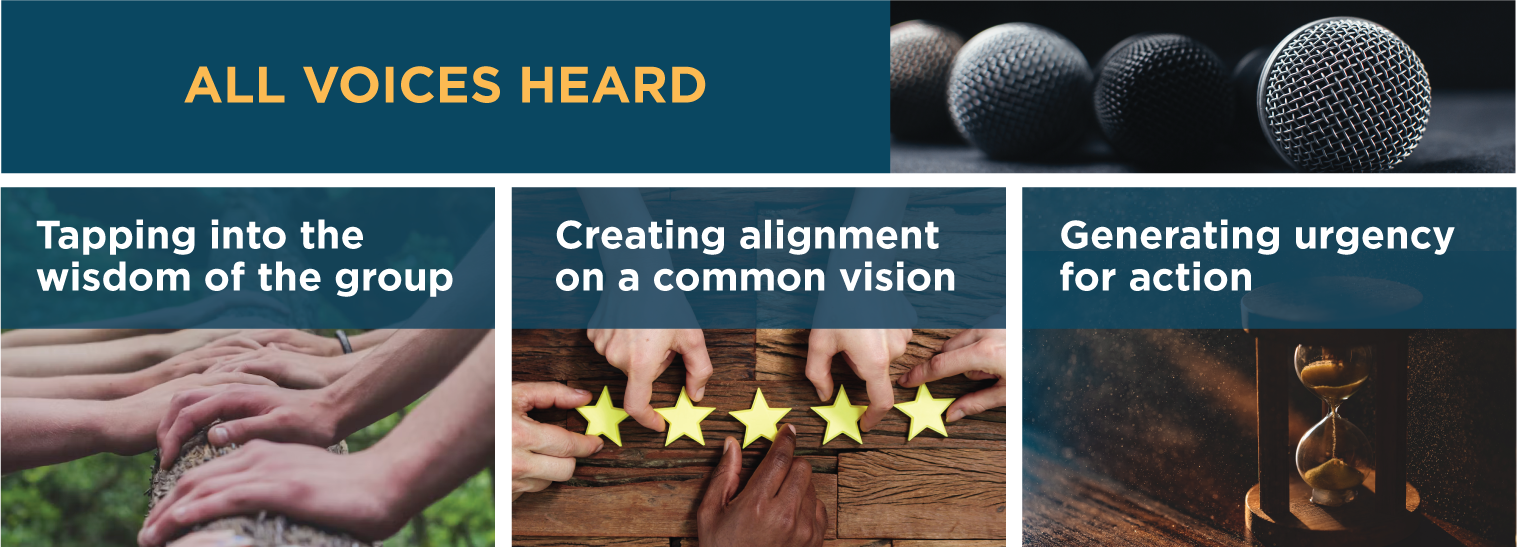
This is also where an All Voices Heard culture strengthens alignment.
When people feel comfortable asking questions, raising concerns, and offering different perspectives, leaders uncover confusion before it becomes disengagement. Teams develop a shared understanding of priorities and build the trust needed to execute together.
Putting Alignment into Practice

Creating alignment starts with intentional leadership habits.

Translate organizational strategy into the language of your team's everyday work.

Create regular opportunities for people to ask questions, surface confusion, and understand how their work contributes to larger organizational goals.

Continue building your own understanding of the financial, operational, legal, regulatory, and customer realities shaping the organization so you can confidently lead across functions.

Most importantly, communicate the "why" as consistently as the "what." Alignment is not a one-time event. It is an ongoing leadership practice that creates clarity, commitment, and better execution.
Ready to strengthen alignment across your organization?
Take the next step toward extraordinary leadership. Subscribe to All Voices Heard and be the first to receive the next article in this series. In Pillar Three, you'll discover how extraordinary leaders build cultures of excellence where accountability, continuous improvement, and high performance become part of everyday work.
And if you're ready to strengthen alignment through an All Voices Heard approach, contact EnSpark. Together, greater clarity, shared understanding, and stronger leadership can transform strategy into sustained results.
Next in this series: Pillar Three, Excellence.

About the Author
Laura Gramling has the experience and expertise to help you transform your organization in an AI-driven world. Together with her talented team, she builds on the strengths of your people to help them embrace the future with confidence. Laura approaches every client engagement knowing that each person brings a unique and vital perspective — unlocking a greater collective willingness to move forward.
With over 20 years as a change, leadership, and performance consultant, Laura has guided organizations across industries including higher education, tech, and pharma. She is an expert in organizational performance, meeting design and facilitation, and navigating complex change.