From Change Fatigue to Organizational Resilience: Thriving in a Complex World
By Laura Gramling – Founder & President

Complexity Is the New Reality
Organizations today aren't just navigating change, they're navigating complexity. Digital transformation, shifting workforce expectations, economic uncertainty, and rapid AI adoption don't exist in isolation. They interact in unpredictable ways, creating challenges that traditional planning approaches weren't built to handle.
Where change once arrived as a discrete event, such as a new system, a restructuring, or a strategic initiative, leaders and employees now face multiple simultaneous shifts, competing priorities, and incomplete information. For many organizations, complexity has become the environment itself.
The result is change fatigue. When uncertainty feels relentless, even capable teams struggle to maintain focus and momentum. This is why so many transformation efforts fall short. The real challenge isn't managing change; it's helping people stay engaged and effective within complexity.
Why Complexity Requires a Different Approach
Complexity is not the same as complication. Complicated problems can be solved through expertise and analysis. Complex ones involve uncertainty, interdependence, and outcomes that can't always be predicted. There is rarely a clear roadmap.
Organizations can't rely solely on top-down solutions in these environments. They need people who can adapt, collaborate, and respond as conditions evolve.
This is where a strengths-based approach becomes essential.
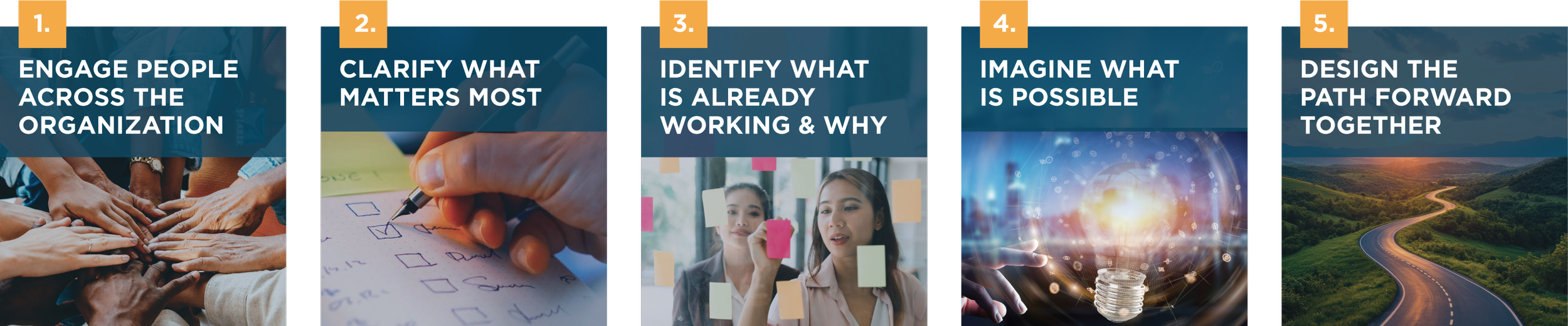
Rather than focusing on gaps or resistance, a strengths-based approach helps organizations identify what's already working and build on it. When people understand how their strengths contribute to organizational success, they're better equipped to handle ambiguity and maintain confidence during disruption.
Moving Beyond Change Fatigue
When employees face a constant stream of new initiatives and shifting expectations, disengagement follows. Energy declines, focus fragments, and trust erodes when people feel they're perpetually reacting rather than moving forward.
Organizations can't eliminate complexity, but they can help people navigate it more effectively. A strengths-based approach counters change fatigue by creating opportunities to recognize progress and reinforce the capabilities that enable teams to perform at their best. Small wins and visible momentum matter, especially when outcomes aren't immediate.
Building Organizational Resilience
Resilience isn't simply the ability to withstand pressure. It's the capacity to adapt, learn, and keep moving when conditions are uncertain.
Resilient organizations don't achieve stability by controlling every variable. They build cultures where people are equipped to respond when variables change. A strengths-based culture supports this by:
Increasing confidence in individual and team capabilities
Encouraging cross-functional collaboration
Creating psychological safety for learning and experimentation
Reinforcing trust during uncertainty
Connecting people's work to a larger purpose
The organizations that thrive aren't necessarily those with the most resources or the most detailed plans. They're the ones with the capacity to adapt while staying aligned around what matters most.
Ready to Build Resilience?
Complexity isn't going away. But with the right approach, it can become a catalyst for innovation and growth rather than a source of exhaustion.
If your organization is navigating ongoing change, EnSpark's consulting, facilitation, and leadership development solutions can help you build the clarity, engagement, and resilience to thrive. Reach out at contact@ensparkconsulting.com to start the conversation.

About the Author
Laura Gramling has the experience and expertise to help you transform your organization in an AI-driven world. Together with her talented team, she builds on the strengths of your people to help them embrace the future with confidence. Laura approaches every client engagement knowing that each person brings a unique and vital perspective — unlocking a greater collective willingness to move forward.
With over 20 years as a change, leadership, and performance consultant, Laura has guided organizations across industries including higher education, tech, and pharma. She is an expert in organizational performance, meeting design and facilitation, and navigating complex change.